Bee venom is often misunderstood. The word “venom” naturally sounds dangerous, yet this remarkable natural substance has been studied and used by humans for thousands of years. Today, bee venom is attracting attention in fields ranging from skincare and medicine to biotechnology and agriculture.
You may have seen bee venom mentioned in luxury anti-aging creams, traditional apitherapy treatments, or even research papers exploring natural antimicrobial compounds. Despite this growing popularity, many people still associate bee venom only with a painful bee sting.
In reality, bee venom is a complex biological substance with clearly identified components and well-studied biological activity. Understanding what bee venom is made of and how it works can help dispel common myths and reveal why this ancient substance is gaining modern scientific interest. 🐝
🐝 What Is Bee Venom?
Bee venom is a transparent, slightly yellow liquid produced by the venom glands of worker honeybees. It plays a defensive role for the colony, helping bees deter predators or threats.
Contrary to common belief, bee venom is not saliva. Worker bees release it only when they sting. Each bee produces a very small amount—typically around 0.1 to 0.3 micrograms per sting.
Because of this extremely small yield, producing purified venom requires the involvement of thousands of bees. This explains why high-purity bee venom used in research or cosmetic formulations remains relatively expensive.
From a scientific perspective, bee venom is a complex bioactive mixture. It contains peptides, enzymes, and small molecules that interact with biological systems. Fresh venom has a faint aromatic smell, dissolves easily in water, and maintains stability when properly dried and stored.
These characteristics allow bee venom to be processed into stable powdered extracts that can retain biological activity for years.
🔬 What Is Bee Venom Made Of?
Understanding what bee venom is made of helps explain its biological effects. Scientists have identified more than 40 active components, which can generally be grouped into three major categories.
Peptides: The Core Bioactive Components
Peptides represent around 70–80% of bee venom’s dry weight and carry most of its biological activity.
The most prominent peptide is melittin, which accounts for roughly 40–50% of the venom composition. Research has shown that melittin has strong antimicrobial and anti-inflammatory properties, making it a focus of biomedical studies.
Another peptide, apamin, can cross the blood-brain barrier and has been investigated for potential neurological research. Meanwhile, MCD peptide is known for its ability to influence immune responses.
Together, these peptides form the biochemical foundation behind many bee venom benefits and uses explored in modern science.
Enzymes: Enhancing Biological Activity
Enzymes make up about 12–15% of bee venom and play supporting roles in its activity.
Two particularly important enzymes are phospholipase A2 and hyaluronidase.
Hyaluronidase is often described as a “spreading factor.” It increases tissue permeability, allowing other venom components to penetrate tissues more effectively. Phospholipase A2, on the other hand, participates in inflammatory pathways and contributes to the biological responses associated with bee venom.
Bioactive Amines: Modulating Local Reactions
Bee venom also contains small molecules such as histamine and dopamine.
These compounds influence pain signaling, blood vessel dilation, and localized inflammatory responses. Although present in smaller quantities, they play a role in the physiological effects observed after a bee sting.
📜 Bee Venom in Traditional and Modern Medicine
The use of bee venom in therapy is far from new. Historical records from ancient China mention bee sting treatments for joint pain and inflammation.
Traditional apitherapy methods gradually evolved into structured therapeutic approaches. Ancient Greek physician Hippocrates reportedly used bee stings to treat arthritis-like conditions.
Modern scientific research began taking shape in the late nineteenth century. In 1888, Austrian physician Philipp Terc published one of the earliest clinical studies describing bee venom therapy for rheumatism.
Today, scientists continue exploring bee venom benefits and uses in areas such as immunology, neurology, and dermatology.
For readers interested in broader bee-derived ingredients, the National Institutes of Health research database provides extensive biomedical studies:
https://pubmed.ncbi.nlm.nih.gov
🌿 Bee Venom in Skincare and Modern Industries
One of the most visible modern applications is bee venom in skincare and medicine.
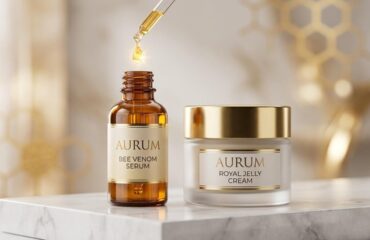
Some cosmetic brands use controlled concentrations of bee venom in anti-aging formulations. The idea is that certain peptides may help stimulate skin activity and support collagen production.
In addition to cosmetics, bee venom is also being studied for potential applications in:
- pharmaceutical research
- immune regulation studies
- antimicrobial development
- bio-based agricultural products
Organizations such as the International Federation of Beekeepers’ Associations (Apimondia) provide valuable resources on bee science and apiculture:
https://www.apimondia.com
If you are exploring natural bee-derived ingredients, many producers also provide insights into honey, royal jelly, and other bee products. For example, natural bee product suppliers such as Delee Honey share industry updates and research on their blog:
https://deleehoney.com/news/
🚀 Why Bee Venom Is Gaining Global Attention
Several global trends have pushed bee venom into the spotlight.
First, consumers are increasingly interested in natural bioactive ingredients. In both cosmetics and health products, plant- and bee-derived compounds are often perceived as more natural alternatives.
Second, scientific research continues to reveal new potential uses for bee venom compounds, particularly antimicrobial peptides such as melittin.
Finally, advances in purification technologies and biotechnology have made it easier to isolate and standardize venom components for research and product development.
Although the name may sound intimidating, bee venom is far more than just a painful defense mechanism. It is a complex natural substance containing dozens of bioactive compounds with fascinating biological properties.
From traditional healing practices to modern scientific exploration, bee venom has maintained a unique place at the intersection of nature and medicine.
As research continues to unfold, this ancient natural material may reveal even more possibilities in health, skincare, and biotechnology. 🐝