Why the Bee Venom Industry Is Surging 🐝
The bee venom industry is rapidly evolving into a high-growth global sector, driven by biotechnology breakthroughs and rising demand for natural bioactive ingredients. Once limited to niche therapies, it now spans pharmaceuticals, skincare, agriculture, and advanced research.
From premium anti-aging formulations to experimental oncology pipelines, the industry has shifted from concept to commercialization. Recent global bee venom market trends highlight strong growth momentum, reinforcing its position as a serious player in the broader health economy.
Bee Venom Industry Market Size and Growth Dynamics 📈
The bee venom industry has entered a phase of accelerated expansion. By 2025, the market exceeded $2.8 billion and is projected to surpass $7 billion by 2030.
This growth is fueled by multiple factors:
- 🌱 Demand for clean-label and natural ingredients
- 🧪 Rapid progress in synthetic bee venom production technology
- 🏥 Expanding bee venom applications in pharmaceuticals
- 🌍 Policy support for antibiotic alternatives
According to recent market data from
👉 https://www.grandviewresearch.com/industry-analysis/bee-venom-market
Asia-Pacific dominates production, while North America leads in innovation, especially in drug development.
Bee Venom Industry Value Chain Breakdown 🔬
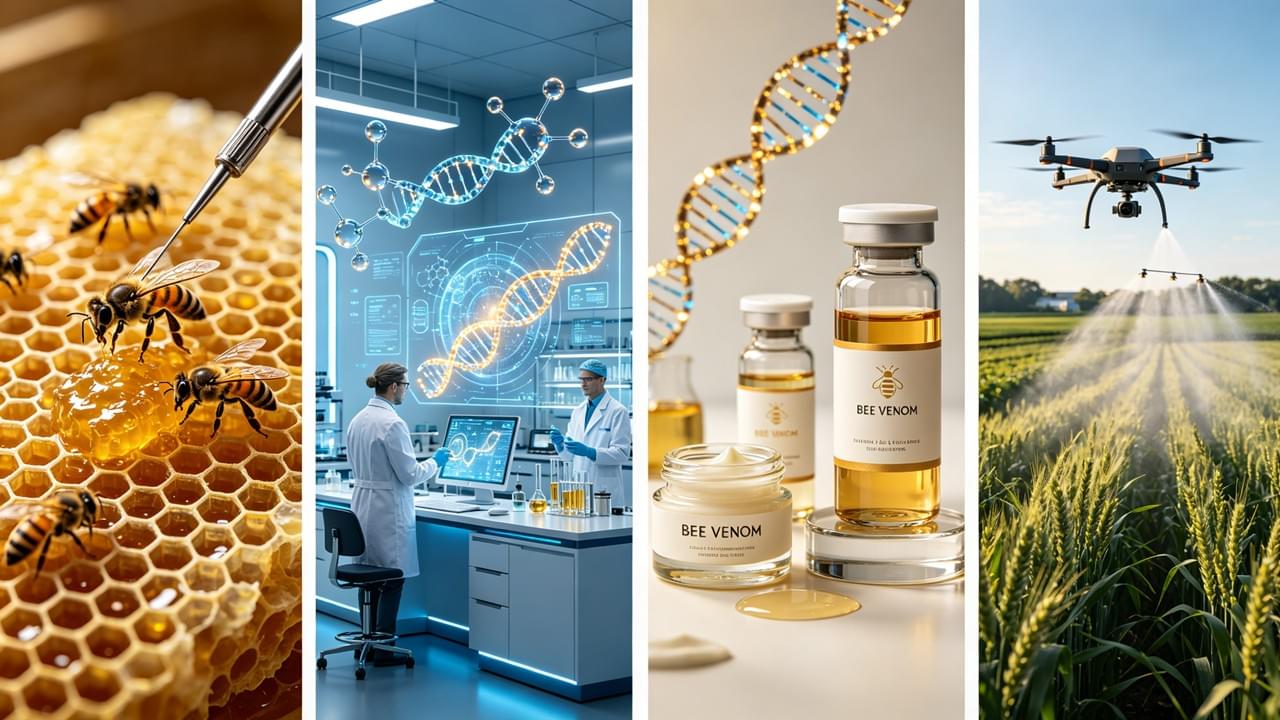
To understand the bee venom industry, it helps to break it into three core layers:
1. Upstream: Raw Material Production
This stage includes natural venom extraction and recombinant peptide synthesis. Traditional collection methods are increasingly replaced by electric stimulation, improving efficiency without harming bees.
At the same time, synthetic bee venom production technology is reshaping supply dynamics by lowering costs and ensuring consistent purity.
2. Midstream: Product Development
Here, raw materials are transformed into:
- Pharmaceutical formulations
- Cosmetic ingredients
- Agricultural solutions
For businesses looking to navigate sourcing and formulation challenges, a practical guide like
👉 https://deleebeevenom.com/bee-venom-products-7-costly-mistakes-to-avoid-before-you-buy/
can help clarify supplier selection and quality standards.
3. Downstream: Applications & Distribution
Distribution channels vary by sector:
- 💊 Medical: regulated hospital systems
- 💄 Cosmetics: online and retail channels
- 🌾 Agriculture: specialized distributors
Each segment operates under distinct regulatory and commercial frameworks.
Bee Venom Industry Opportunities: 4 High-Growth Segments 🚀
The bee venom industry is expanding rapidly across several high-potential sectors:
1. Oncology Drug Development
Bee venom peptides are gaining attention for multi-target anti-cancer effects. Research published in databases such as
👉 https://pubmed.ncbi.nlm.nih.gov/
continues to validate their therapeutic potential, especially when combined with nanotechnology.
2. Agriculture & Livestock
As global regulations limit antibiotic use, bee venom is emerging as a natural alternative in feed additives and crop protection.
3. Skincare & Aesthetic Medicine
The cosmetic segment is growing at over 20% annually, driven by demand for functional and bioactive skincare.
4. Anti-Infective Research
With antibiotic resistance becoming a global concern, bee venom peptides are being explored as next-generation antimicrobial agents.
Bee Venom Industry Challenges and Bottlenecks ⚠️
Despite strong growth, the bee venom industry faces several structural challenges:
- ❗ Lack of unified global quality standards
- 🧬 Limited large-scale human clinical data
- 🏭 Scalability constraints for natural extraction
- 📉 Market misconceptions driven by misinformation
These barriers slow down both regulatory approval and wider adoption, particularly in pharmaceutical applications.
Bee Venom Industry Future Trends and Breakthrough Paths 🔮
Looking forward, the bee venom industry is expected to evolve along five major directions:
- 📊 Standardized quality and safety frameworks
- 🧪 Expansion of synthetic production capabilities
- 💉 Accelerated clinical translation
- 🌱 Growth in agricultural applications
- 🏆 Emergence of integrated industry leaders
Technology will remain the key differentiator, especially in bridging the gap between research and real-world application.
Conclusion: A Defining Decade for the Bee Venom Industry 🌍
The bee venom industry stands at a turning point. It combines natural bioactivity with cutting-edge science, offering solutions across multiple industries.
While challenges remain, the direction is clear—greater standardization, deeper research validation, and broader commercialization. For stakeholders across the value chain, the next five years will define leadership in this fast-evolving billion-dollar market.