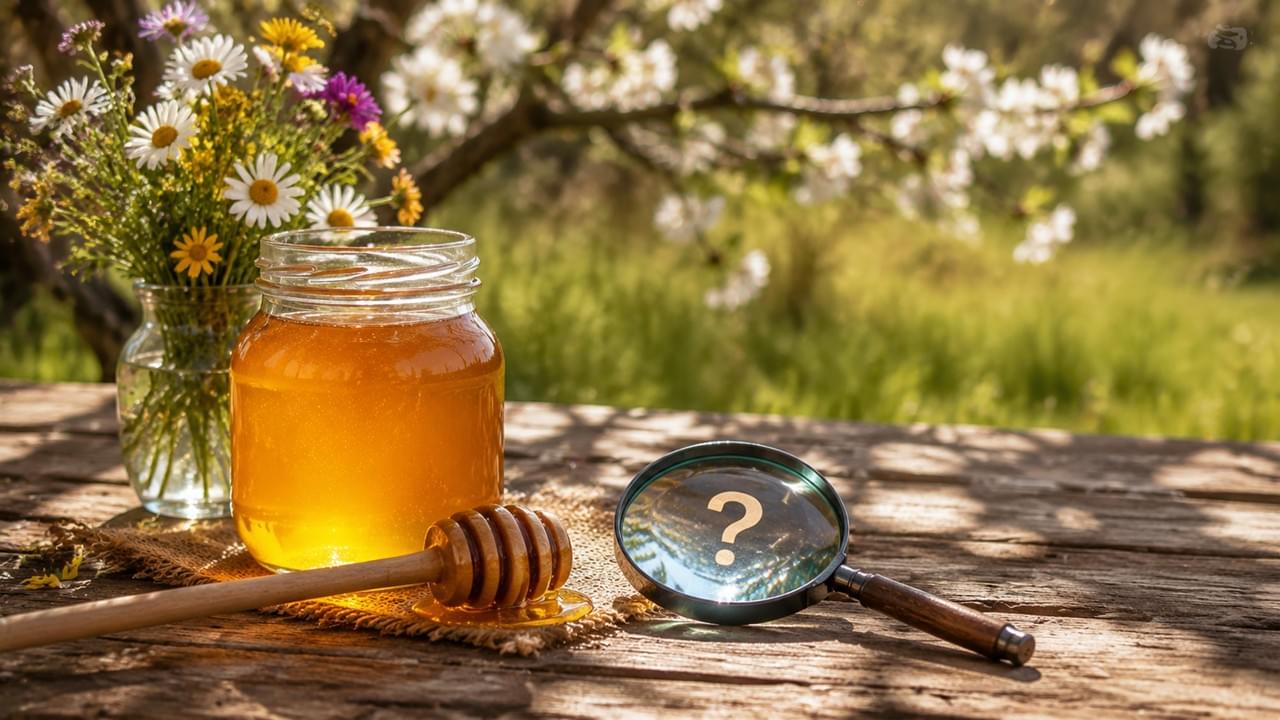
Every spring, as pollen counts climb and tissues become a household essential, the same question resurfaces: can a daily spoonful of local honey finally bring relief? The idea is everywhere—social media, farmers’ markets, even conversations with well-meaning friends. But before you stock up on jars, let’s look at what the science actually says about local honey for allergies.
🌿 The theory sounds logical—but it has a fatal flaw.
The belief that local honey can treat seasonal allergies stems from immunotherapy, a legitimate medical treatment where patients receive controlled, gradually increasing doses of allergens to build tolerance. In theory, because bees collect pollen from local plants, their honey should contain traces of the very pollens that trigger your hay fever. By eating it daily, you might desensitize your immune system.
The problem? The pollen in honey isn’t the pollen that makes you sneeze. Seasonal allergies—hay fever, allergic rhinitis—are almost always triggered by windborne pollen from trees, grasses, and weeds like birch, ragweed, and ryegrass. Bees, however, collect pollen from brightly colored flowers—heavy, sticky pollen that doesn’t float through the air. As the American Academy of Allergy, Asthma and Immunology (AAAAI) explains, the only way windborne pollen ends up in honey is “by chance, if it were blown into the hive or onto the flowers”.
🧪 What do the studies actually show?
Multiple peer-reviewed studies have investigated whether local honey for allergies provides any real benefit. The results are clear—and disappointing for believers.
The most frequently cited clinical trial, published in the Annals of Allergy, Asthma & Immunology in 2002, divided 36 allergy sufferers into three groups. One received locally collected, unpasteurized honey. Another received nationally collected, processed honey. The third got honey-flavored corn syrup as a placebo. The result? Neither honey group experienced symptom relief beyond what the placebo group reported. As the study authors concluded, “This study does not confirm the widely held belief that honey relieves the symptoms of allergic rhinoconjunctivitis”.
A 2013 Malaysian study did find that patients with allergic rhinitis who consumed Tualang honey showed improved symptoms. However, this study had a small sample size of just 40 participants, and its findings haven’t been consistently replicated. In Finland, researchers gave 44 people with birch pollen allergies either honey with added birch pollen or regular honey. While the birch-pollen honey group showed some improvement, this doesn’t translate to local honey allergy relief—the allergen was added to the honey, not naturally present.
As one allergist put it, “There’s not really great evidence to suggest that local honey can help seasonal allergies”.
❓ Why doesn’t local honey allergy relief work?
Here’s where the science gets even more specific.
Dosage is critical. In allergen immunotherapy, doctors know exactly how much of each allergen to administer. With honey, the amount of allergenic pollen is “unknown and almost certainly too low to produce a therapeutic immune response”. One batch of honey might contain pollen from three dozen plant varieties; another might contain none of the pollens you’re actually allergic to. Even if the right pollen is present, there’s no guarantee the concentration is high enough to trigger any immune response.
Processing matters, too. Many commercial honeys are filtered and pasteurized, which can remove or destroy pollen particles entirely. And because honey composition varies dramatically by location, season, and even hive, there’s no standardized “dose” that could be studied or recommended.
🌺 What local honey can do for you
None of this means honey is worthless. Quite the opposite—it’s a delicious natural sweetener with genuine, scientifically backed health benefits. As the AAAAI notes, “Honey does contain various substances with potential health properties, such as antioxidants and antimicrobial agents”. Buying local honey also supports small businesses and beekeepers—an excellent reason to include it in your diet. If you’re looking for high-quality, traceable honey products, consider exploring Delee Honey’s product offerings to discover the variety and purity available from a trusted source.
But as a treatment for seasonal allergies? The evidence simply isn’t there. The AAAAI states plainly that “based on current scientific understanding, local honey is not an effective treatment for allergic rhinitis, hay fever or asthma”.
✅ So what actually works for seasonal allergies?
If you’re tired of sneezing through spring, don’t rely on honey. Instead, consider these evidence-backed approaches:
- Over-the-counter antihistamines provide quick relief from sneezing and itching
- Nasal corticosteroid sprays reduce inflammation in the nasal passages
- Allergy immunotherapy (allergy shots or sublingual tablets) addresses the root cause by building long-term tolerance
For severe or persistent symptoms, consult a board-certified allergist who can test for specific triggers and develop a personalized treatment plan. You can find an allergist through the AAAAI’s Find an Allergist / Immunologist service.
⚠️ A quick safety note
Honey should never be given to infants under one year old due to the risk of infant botulism. And in rare cases, honey can trigger allergic reactions in people with severe pollen or bee allergies—ironically, the very people hoping it might help them.
The bottom line: Local honey is a wonderful food with real health benefits. But if you’re counting on it to get through allergy season, you’ll likely be disappointed. Stick with what works—proven treatments and professional medical advice—and enjoy your honey for what it is: nature’s sweetest treat, not a cure for hay fever.
For more insights on honey, bee products, and their genuine health benefits, visit the Delee Honey blog to explore articles on honey quality, sustainable beekeeping, and product knowledge.
Disclaimer: This article is for informational purposes only and does not constitute medical advice. Always consult a qualified healthcare provider before starting any new treatment for allergies or other health conditions.