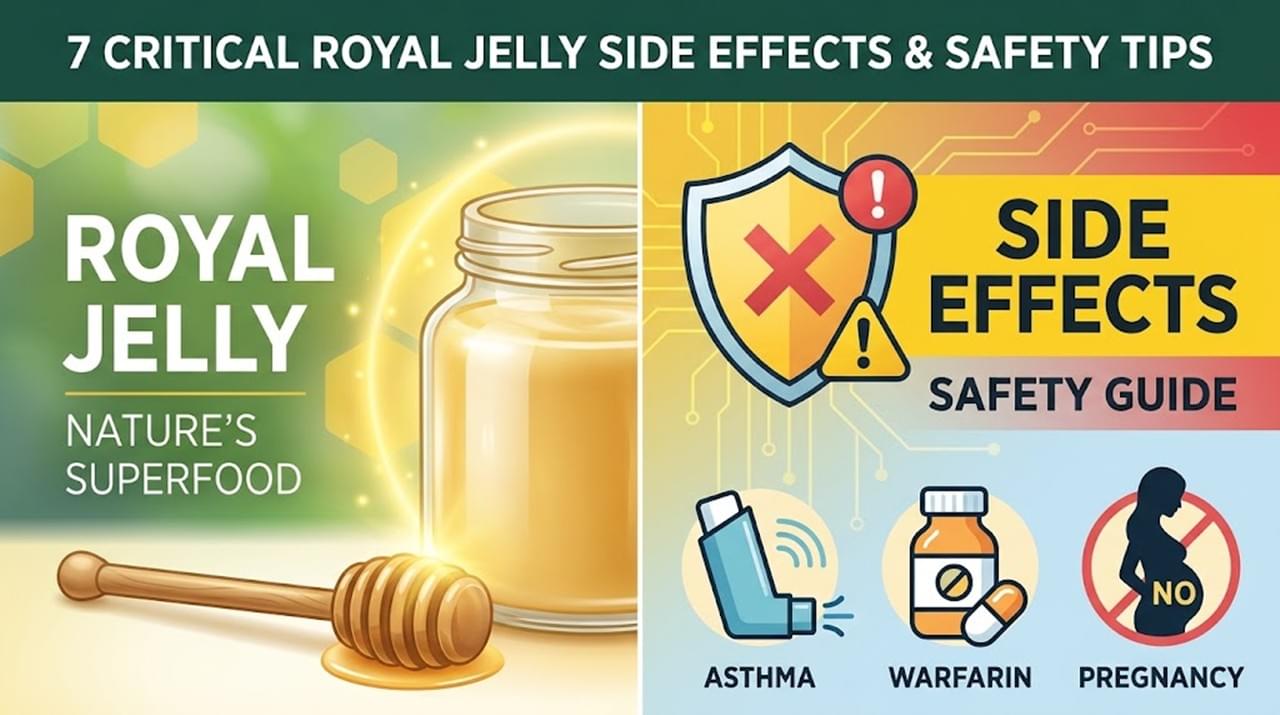
Royal jelly is often celebrated as the ultimate superfood from the hive. Secreted by nurse bees to nourish the queen, this creamy substance packs essential amino acids, unique fatty acids like 10-HDA, and vital vitamins. However, natural remedies aren’t completely risk-free. Understanding royal jelly side effects is essential before incorporating this powerhouse ingredient into your daily routine.
While royal jelly offers remarkable perks for skin vitality and energy, taking it blindly can trigger unexpected health issues. Here is a clear guide on royal jelly side effects, medication risks, and how to use it safely.
1. Recognizing Royal Jelly Allergic Reaction Symptoms ⚠️
The most urgent risk linked to bee products is a severe immune response. Because it contains active proteins and trace amounts of botanical pollen, royal jelly can trigger sudden reactions in sensitive individuals.
Knowing royal jelly allergic reaction symptoms early can save you from severe discomfort:
- 🩺 Skin Reactions: Sudden hives, red patches, intense itching, or localized skin swelling.
- 🤢 Digestive Troubles: Abdominal cramps, sudden nausea, vomiting, or loose stools.
- 🫁 Respiratory Distress: Wheezing, persistent coughing, chest tightness, or shortness of breath.
If you struggle with asthma or have known allergies to ragweed or honeybee stings, you should skip royal jelly altogether. In rare cases, severe exposure can cause anaphylaxis—a medical emergency that causes throat swelling and a sharp drop in blood pressure.
2. Exploring Royal Jelly Side Effects on Blood Thinners 🩸
Bioactive compounds inside royal jelly can interact with daily prescription drugs. If you are managing a cardiovascular condition, paying attention to royal jelly side effects is vital for your safety.
The primary concern involves the royal jelly and warfarin interaction. Research suggests that royal jelly can amplify the effects of warfarin (Coumadin) and similar blood thinners. This interference slows down blood clotting, significantly increasing your risk of unexpected bruising and internal bleeding. Always clear any bee supplement with your cardiologist first.
3. How Royal Jelly Side Effects Impact Blood Pressure 📉
Beyond blood thinners, royal jelly contains natural peptides that promote vasodilation—meaning they help relax your blood vessels. While this sounds like a great benefit for cardiovascular wellness, it presents a hidden risk if you already take antihypertensive medications.
Combining royal jelly with blood pressure drugs can lead to an additive drop in pressure. This sharp drop causes sudden dizziness, lightheadedness, and fainting spells, especially when standing up quickly.
4. Assessing Royal Jelly Safety During Pregnancy and Nursing 🍼
Expectant and nursing mothers naturally want to choose the safest nutrition for their babies. However, when evaluating royal jelly safety during pregnancy, caution is your best policy.
Clinical studies on royal jelly’s safety for developing fetuses and breastfed infants remain insufficient. Furthermore, royal jelly exhibits mild estrogenic activity, which could alter sensitive hormonal balances during pregnancy. To stay completely safe, mothers should avoid royal jelly until after weaning, or only use it under strict medical supervision.
5. Royal Jelly Side Effects in Children and Young Infants 👶
Children have delicate, continuously developing digestive and immune systems. Introducing potent apitherapy products too early can trigger early-onset sensitivities or stomach distress.
Due to the concentrated nature of bee proteins, health experts advise against giving raw or high-potency royal jelly to young children. Their immune systems can misinterpret these complex proteins as dangerous invaders, raising the risk of sudden allergic reactions.
6. Digestive Upset and Dosage-Related Royal Jelly Side Effects 🧪
Even without underlying medical conditions or allergies, taking too much royal jelly too quickly can upset your stomach. Mild digestive discomfort is one of the most common complaints among first-time users.
High initial doses often lead to mild stomach irritation, nausea, or diarrhea as your gut adjusts. To avoid these unwanted royal jelly side effects, start with a tiny micro-dose (around 100 to 250 mg daily) to test your tolerance before ramping up to standard supplemental amounts.
7. How to Prevent Royal Jelly Side Effects with Smart Practices 💡
You can easily minimize your risks by following a few practical safety rules:
- 🔬 Perform a Patch Test: Apply a tiny dab of topical royal jelly on your inner forearm and wait 24 hours to check for redness.
- 🏷️ Choose Certified Brands: Look for heavy-metal testing and clear sourcing labels, such as our pure Bee Venom Powder and natural hive extracts.
- ❄️ Store It Properly: Keep fresh royal jelly cold to prevent spoilage, or choose stable formulations like lyophilized powders.
For further clinical reading on natural product safety, check out the comprehensive WebMD Royal Jelly Safety Overview for detailed health guidelines.
Final Thoughts 🌿
Royal jelly remains a wonderful gift from the hive, but respect its natural potency. By staying aware of royal jelly side effects, listening to your body, and consulting your physician, you can safely enjoy the incredible benefits of bee-derived wellness!