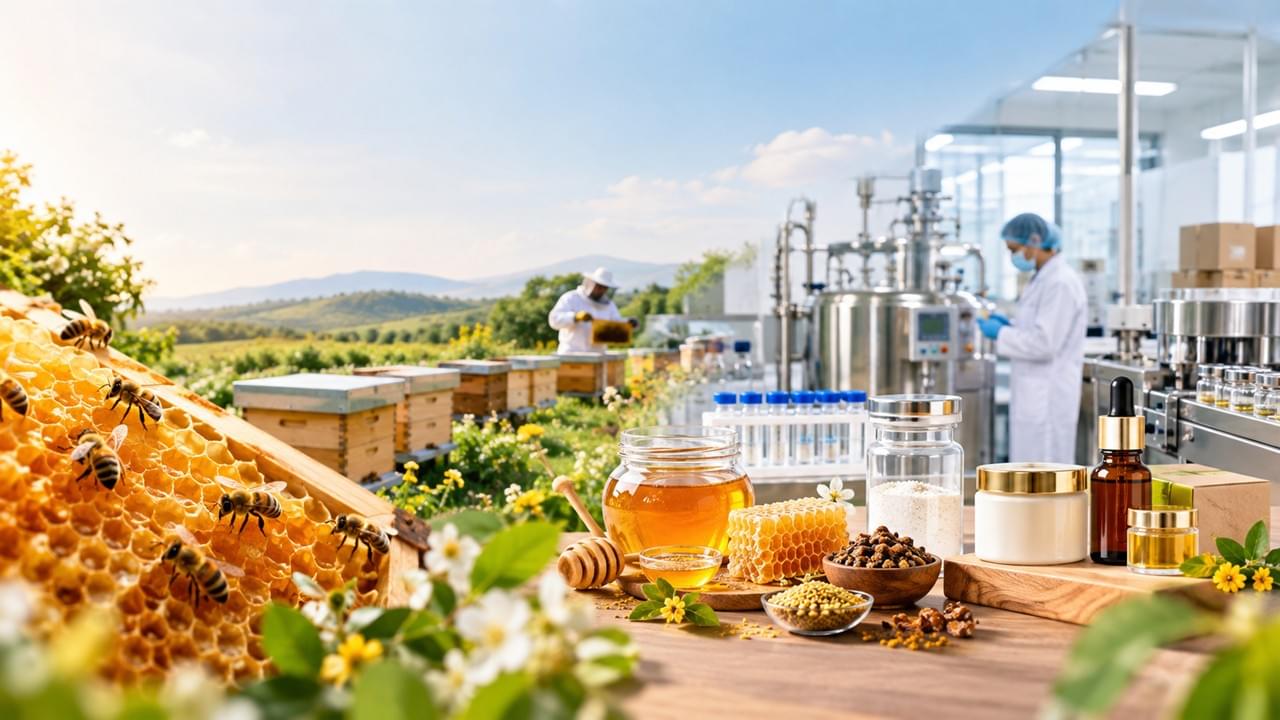
For today’s natural-product buyers, “natural” is no longer enough. They want to know where an ingredient comes from, how it was collected, how it was processed, and whether the finished product can be traced back to its source. That is the real value of bee product traceability. For Deleehoney, the journey begins at the bee farm and continues through collection, production, quality management, and delivery.
1. Bee Product Traceability Starts at the Hive
Every bee-derived ingredient has a story that begins with the colony. Delee Foods Group states that it operates its own bee farm and factory, giving the company greater control over sourcing and production. Its website also says its honey and bee products follow traceability procedures.
This direct connection matters for B2B buyers because it makes the path from raw material to production easier to understand.
2. Bee Product Traceability Protects Responsible Sourcing
Bee venom requires particular attention because the collection method matters to sourcing and bee welfare. Deleehoney describes its bee venom as naturally collected and says the process is designed to collect venom without harming bees.
This is where ethical bee venom collection becomes part of the wider traceability story. Buyers increasingly want more than a product specification; they also want to understand how an ingredient is obtained.
🐝 Ethical sourcing connects production practices with transparency, responsible beekeeping, and long-term supply relationships.
3. Bee Product Traceability Continues Through Processing
Raw material is only the beginning. Once collected, bee products need controlled handling and production procedures before becoming commercial ingredients. Delee states that it follows standardized operating processes and a quality management system from raw materials through production.
For bee venom, the journey can include collection, handling, processing, testing, storage, and preparation for shipment. Keeping these stages connected creates a clearer record of how the ingredient moves through the bee venom supply chain.
For manufacturers, this matters when an ingredient becomes part of a formula. Consistent sourcing and documented production practices can make supplier evaluation easier for cosmetic, food, wellness, and research applications.
4. Bee Product Traceability Creates Greater Quality Visibility
Quality control is stronger when it is connected to traceability. If a product can be linked to its source and production history, buyers have a clearer picture of how it moved through the supply chain.
Deleehoney highlights its own factory, professional R&D team, production equipment, and testing capabilities. The company also emphasizes “Quality, Creditability, and Service.”
For professional buyers, natural bee product quality control should be viewed as a process rather than a single final inspection. The goal is oversight across sourcing, production, and delivery.
🔎 A useful supplier question is simple: “Can you explain the journey of this batch?” A transparent supply chain should provide a clear answer.
5. Bee Product Traceability Makes B2B Purchasing Easier
Traceability becomes especially valuable when buyers purchase for commercial production. A skincare manufacturer may need bee venom for product development, while a food company may require honey for a finished recipe. Their needs differ, but both benefit from reliable sourcing information.
Delee Foods Group states that it supports small orders, offers product recommendations, evaluates transportation plans, and provides order follow-up. These services matter to buyers who need more than a commodity supplier.
Its official website and natural bee product information give potential customers a starting point for discussing products, specifications, and purchasing needs.
6. Bee Product Traceability Supports Long-Term Trust
A traceable supply chain can help turn a purchase into a more informed supplier relationship. Buyers can ask better questions about origin, production, quality, packaging, logistics, and future supply.
For Deleehoney, this approach is connected with its positioning as a manufacturer and exporter. The company says it has its own bee farm and factory and provides professional one-step service.
🌿 The story does not end when the ingredient leaves the hive. It continues through manufacturing and reaches the customer with a supply chain behind it.
7. Bee Product Traceability Brings the Story Back to You
Ultimately, traceability is about confidence. A jar of honey, a bee venom ingredient, or another bee-derived product may look simple when it reaches a buyer, but its quality story began much earlier.
From the hive to collection, processing, quality management, and delivery, each stage contributes to the final product.
For businesses sourcing bee-derived ingredients, asking about bee product traceability is a practical way to evaluate suppliers. It moves the conversation beyond price toward origin, responsible sourcing, production control, and service.
Final Thoughts: From Hive to You
The strongest natural-product stories are built on details buyers can understand: where the material comes from, how it is collected, how it is handled, and how the supply chain is controlled.
Deleehoney brings these elements together through its bee farm, factory, traceability procedures, standardized production practices, and customer service.
🍯 From the first hive inspection to the final shipment, every step matters. When that journey is visible, “from the hive to you” becomes more than a memorable phrase—it becomes a clearer way to understand the product behind the package.