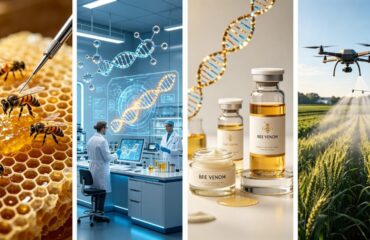
Bee venom agriculture is rapidly emerging as a transformative force across livestock and crop production. Once limited to skincare and medicine, this natural bioactive compound is now stepping into the spotlight as farmers and agribusinesses search for safer, more sustainable solutions.
Driven by policies like antibiotic bans in feed and pesticide reduction initiatives, bee venom is no longer a niche concept—it’s becoming a scalable, high-value agricultural input. 🌍
⚖️ Why Bee Venom Agriculture Is Entering a Golden Era
🐝 Bee Venom Agriculture Meets Antibiotic-Free Farming
The global shift toward antibiotic alternatives in animal farming has created a massive gap. Since the implementation of feed antibiotic bans, livestock producers face rising disease risks and reduced productivity.
Bee venom offers a compelling solution. Its natural antimicrobial peptides help control harmful bacteria without causing resistance. At the same time, it supports immune balance—something traditional antibiotics cannot achieve.
🌱 Bee Venom Agriculture and Biopesticide Demand
As governments push for reduced chemical pesticide use, bee venom biopesticide applications are gaining traction.
Unlike conventional chemicals, bee venom peptides act through multiple biological pathways, making it difficult for pests to develop resistance. They are biodegradable, environmentally friendly, and safer for beneficial insects when properly formulated.
For more on global pesticide reduction policies, you can explore the FAO’s overview here:
👉 https://www.fao.org/agriculture/ippm/activities/pesticide-risk-reduction/en/
🐄 Bee Venom Agriculture in Livestock Production
🧪 Bee Venom Agriculture as a Feed Additive
One of the most advanced uses of bee venom agriculture is in feed additives.
Research shows that bee venom feed additive for livestock can:
- ✔ Improve gut microbiota balance
- ✔ Reduce diarrhea and infection rates
- ✔ Enhance feed conversion efficiency
- ✔ Boost weight gain
For example, poultry trials have demonstrated improved growth performance and lower mortality rates compared to antibiotic-fed groups.
💉 Bee Venom Agriculture in Animal Disease Control
Beyond feed, bee venom is being explored in disease prevention and treatment.
Its antimicrobial and anti-inflammatory properties make it particularly effective against resistant infections. In dairy farming, for instance, it has shown promising results in managing mastitis without leaving harmful residues in milk.
🧬 Bee Venom Agriculture as a Vaccine Adjuvant
Another exciting frontier is vaccine development. Bee venom peptides can act as immune stimulators, enhancing vaccine effectiveness.
Studies indicate that they may increase antibody response while reducing the required antigen dose—making vaccines more efficient and cost-effective.
🌾 Bee Venom Agriculture in Crop Protection
🐛 Bee Venom Agriculture for Pest Control
In crop farming, bee venom agriculture is opening new possibilities in pest management.
It has demonstrated strong activity against common agricultural pests such as aphids, caterpillars, and mites. Unlike traditional pesticides, it disrupts cell membranes and nervous systems simultaneously, delivering fast and effective results.
🍃 Bee Venom Agriculture for Plant Disease Resistance
Bee venom also shows antifungal and antiviral properties, helping crops resist diseases like powdery mildew and mosaic viruses.
Additionally, it may activate plant immune responses, strengthening resilience against environmental stress.
For insights into sustainable agriculture trends, refer to:
👉 https://www.worldbank.org/en/topic/agriculture
🚀 Breaking the Cost Barrier: Synthetic Biology
A major limitation of bee venom agriculture used to be cost. Natural extraction is labor-intensive and inefficient.
However, advances in synthetic biology have changed the game. Recombinant production of bee venom peptides now allows large-scale fermentation, reducing costs dramatically.
This breakthrough makes it feasible to use bee venom in bulk agricultural applications, from feed additives to crop protection products.
📊 The Future of Bee Venom Agriculture
The trajectory is clear: bee venom agriculture is moving from experimental to mainstream.
With expanding applications across livestock, crops, and biotech innovation, the market potential is enormous. Analysts suggest that bio-based agricultural inputs will continue to grow at double-digit rates in the coming years.
For farmers, distributors, and investors, this represents a rare opportunity to enter a high-growth, low-competition sector early.
Explore beekeeping tools supporting production:
👉 https://www.beekeepingeqpt.com/products/
Bee venom agriculture is not just a trend—it’s a response to urgent global challenges in food safety, sustainability, and environmental protection.
By bridging traditional natural resources with modern biotechnology, it offers a practical path toward greener farming systems. 🌿
For those willing to understand the science and act early, this emerging sector could become one of the most valuable opportunities in modern agriculture.