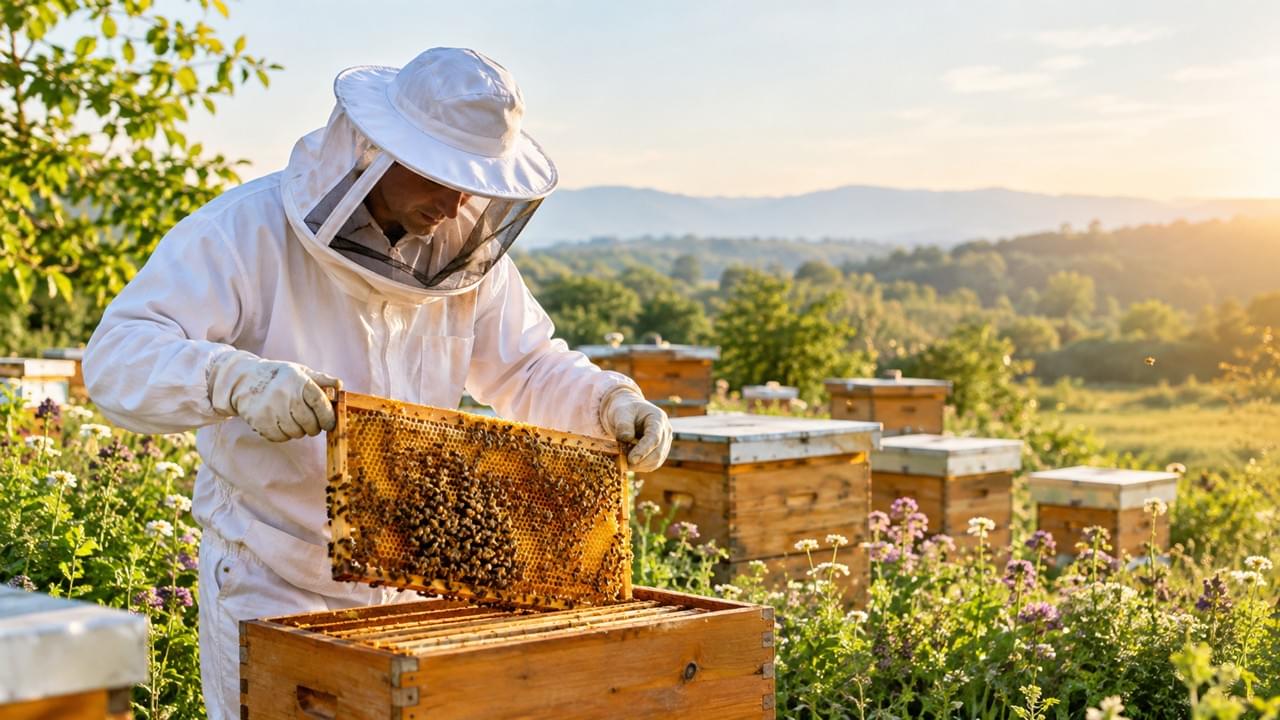
A healthy hive is never just a source of honey or other valuable ingredients. It is a living community that depends on careful management, suitable surroundings, and the right balance between human intervention and nature. That is the foundation of sustainable beekeeping at Deleebeevenom.com.
For Delee, being a bee-product manufacturer means taking responsibility for what happens before a product reaches the processing facility. The company’s philosophy brings together professional hive care, bee health, responsible sourcing, and traceability. 🐝 The goal is straightforward: protect the bees, respect their natural cycle, and build reliable bee-product production for the long term.
1. Sustainable Beekeeping Starts with Healthy Bees
The first lesson of sustainable beekeeping is simple: production should never come before colony health.
A strong colony is better able to maintain its normal activities and adapt to changing conditions. Beekeepers therefore need to observe hive behavior, seasonal changes, food availability, and signs of potential health problems rather than focusing only on harvesting.
This is where bee health management becomes essential. Feeding decisions, disease prevention, colony observation, and timely intervention can all contribute to healthier hives. Good management is not about disturbing bees as little as possible; it is about knowing when intervention is necessary and when the colony should be left to follow its natural rhythm.
2. Professional Beekeeping Is Built on Experience
A hive cannot be managed successfully with a one-size-fits-all checklist.
Experienced beekeepers learn to read subtle changes in colony activity. Weather, flowering periods, temperature, forage availability, and colony strength can all influence how bees behave.
Effective professional beekeeping practices therefore combine practical experience with regular observation. Instead of chasing maximum short-term output, responsible beekeepers look at the condition of the colony over an entire season.
That long-term perspective matters to international buyers, too. When sourcing natural bee products, customers are not only evaluating the final specification. They also want confidence that the raw material comes from a stable and professionally managed supply chain.
3. Respecting the Natural Rhythm of the Hive
🌿 Nature does not operate according to a production calendar.
Bee colonies respond to seasonal flowering, weather patterns, temperature, and available food sources. Responsible sustainable beekeeping works with these cycles rather than attempting to force production regardless of environmental conditions.
This principle is also consistent with international guidance. The FAO describes beekeeping as the practical management of social bee species and highlights sustainable management practices as an important part of protecting bees and the ecosystems connected to them.
For a professional apiary, respecting natural cycles can mean adjusting management practices according to seasonal conditions and avoiding unnecessary pressure on colonies.
4. Bee Protection Supports Better Production
Protecting bees is not separate from commercial production. It is part of the foundation of it.
Bees are important pollinators, and their ecological role extends well beyond the products collected from a hive. According to the FAO, pollinators are critical to food production, biodiversity, and agricultural ecosystems.
That wider role gives sustainable beekeeping a meaning beyond environmental marketing.
For Delee, bee protection is closely connected with responsible bee-product production. A healthier apiary provides a stronger foundation for consistent sourcing while helping preserve the natural system on which beekeeping ultimately depends.
5. Ethical Sourcing Builds Buyer Confidence
🔎 For B2B buyers, “natural” is no longer enough.
Importers, ingredient distributors, cosmetic manufacturers, and other professional customers increasingly want to understand where their raw materials originate. Questions about sourcing, traceability, production methods, and quality control can influence purchasing decisions.
This is why ethical bee product sourcing matters.
Deleebeevenom.com states that its bee products have traceability control procedures and that the company operates its own bee farm and factory. This integrated approach gives customers a clearer connection between the apiary, production process, and finished product.
For buyers developing long-term supply relationships, that transparency can be more valuable than a simple product specification.
6. Traceability Turns a Hive Story into a Supply-Chain Advantage
📍 Traceability is often discussed as a quality-control requirement, but it can also become a commercial advantage.
When a supplier can connect its products to controlled production processes, buyers have more information when evaluating consistency, sourcing practices, and supplier reliability.
Deleebeevenom.com specifically highlights traceability alongside its own bee farm and factory. This fits naturally with the company’s broader emphasis on quality, credibility, and service.
For B2B customers, the benefit is practical: better visibility can make supplier evaluation easier and provide greater confidence when introducing bee-derived ingredients into cosmetic, wellness, or other product lines.
7. The Future Belongs to Responsible Bee Guardians
❤️ The idea of a “bee guardian” is ultimately about responsibility.
A responsible beekeeper understands that a colony is not simply a production unit. It is a living system. Its health, surroundings, food sources, and seasonal rhythm all influence the sustainability of the operation.
That is why sustainable beekeeping brings together several seemingly different priorities: professional knowledge, bee health management, environmental awareness, ethical sourcing, and quality control.
For Deleebeevenom.com, this philosophy supports its role as a natural bee-product manufacturer with its own bee farm and factory. The company’s approach also gives B2B customers a more complete story behind the ingredients they source.
Protecting Bees, Building Better Products
The most valuable lesson from responsible beekeeping is perhaps the simplest: long-term product quality begins with the health of the hive.
Good professional beekeeping practices do not treat nature and production as opposing forces. Instead, they seek a practical balance between responsible harvesting, colony care, environmental awareness, and consistent quality.
For Deleebeevenom.com, that balance is at the heart of its beekeeping philosophy.
🐝 Protect the bees. Respect nature. Control the process. Build trust.
That is what sustainable beekeeping should look like—not simply a trend or marketing phrase, but a long-term commitment to the bees, the people who care for them, and the customers who depend on responsibly sourced bee products.