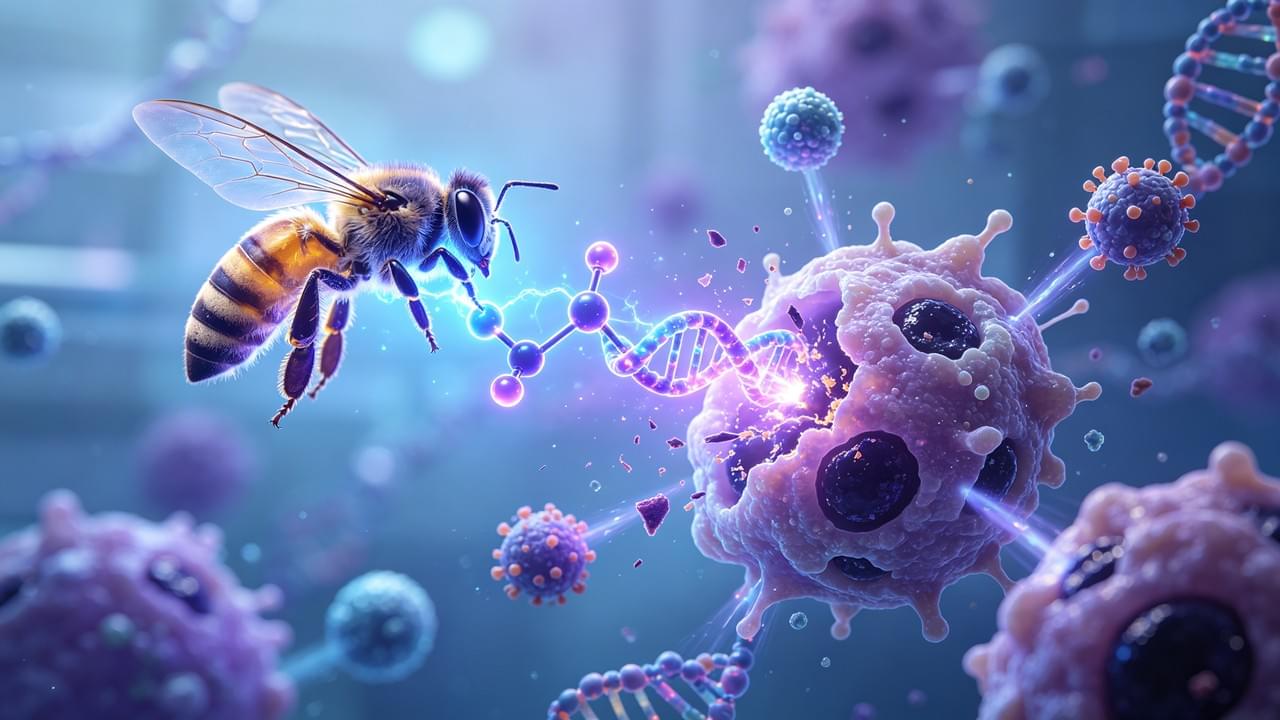
🧬 Bee venom peptide anticancer research has moved far beyond speculation. In the first wave of discussion, many dismissed it as alternative medicine. Today, peer-reviewed studies and preclinical data suggest something more grounded: a multi-target biological mechanism with real therapeutic promise.
From early discoveries to modern nanotechnology, this field is evolving into a serious candidate for next-generation oncology drugs. Let’s break it down clearly—without hype, and without oversimplification.
Bee Venom Peptide Anticancer Is a Legitimate Research Field
The idea that bee venom could influence cancer cells isn’t new. Research dates back over 50 years, with increasing attention in modern molecular biology and oncology.
What changed? Precision science.
Recent bee venom cancer research progress shows that melittin—the main active peptide—interacts directly with tumor biology. Instead of acting like traditional chemotherapy, it operates through multiple biological pathways, making it harder for tumors to resist.
This is why global research teams are exploring it alongside immunotherapy and targeted drugs.
Bee Venom Peptide Anticancer Mechanism: Direct Tumor Cell Destruction
🧪 The most striking aspect of the melittin anticancer mechanism is its physical mode of action.
Unlike drugs that rely on specific receptors, melittin disrupts cancer cell membranes directly. Tumor cells often carry a negative charge on their membranes, which attracts positively charged peptides like melittin.
Once attached, it forms pores in the membrane, leading to rapid cell death.
✔ No reliance on genetic pathways
✔ Minimal chance of resistance
✔ Effective even in drug-resistant tumors
This mechanism explains why bee venom peptides remain active against chemotherapy-resistant cancers.
Bee Venom Peptide Anticancer and Apoptosis Activation
Beyond direct destruction, bee venom peptides trigger programmed cell death—known as apoptosis.
They activate internal signaling pathways that:
- Reduce mitochondrial stability
- Activate caspase enzymes
- Regulate pro- and anti-apoptotic proteins
📊 Studies show apoptosis rates exceeding 80% in certain cancer cell lines under controlled conditions.
This dual mechanism—physical damage + biological signaling—sets it apart from many existing therapies.
Bee Venom Peptide Anticancer Role in Metastasis Control
🚫 Metastasis is responsible for most cancer-related deaths. Here, bee venom peptides show another layer of value.
They can:
- Inhibit enzymes like MMP-2 and MMP-9
- Block tumor cell migration
- Suppress epithelial–mesenchymal transition (EMT)
In simple terms, they slow down how cancer spreads.
This makes bee venom peptide anticancer strategies especially interesting for aggressive cancers like breast and pancreatic tumors.
Bee Venom Peptide Anticancer Meets Immunotherapy
🛡️ One of the most promising areas is synergy with immune treatments.
Many tumors are “cold,” meaning they evade immune detection. Bee venom peptides can help convert them into “hot” tumors by:
- Activating T-cells and NK cells
- Reducing immunosuppressive cells
- Enhancing antigen presentation
When combined with checkpoint inhibitors (like PD-1 therapies), results in preclinical models show significantly improved tumor suppression.
👉 This positions bee venom peptides as a combination therapy enhancer, not just a standalone drug.
Bee Venom Peptide Drug Development: Nanotechnology Breakthrough
⚙️ The biggest barrier to clinical use has always been toxicity—especially hemolysis (damage to red blood cells).
Now, bee venom peptide drug development is overcoming this with nanotechnology:
- Liposomes encapsulate peptides to prevent blood damage
- Targeted ligands guide drugs directly to tumors
- pH-sensitive systems release drugs only in tumor environments
📦 These innovations dramatically improve safety and precision.
Some formulations have already reached advanced preclinical stages, showing strong tumor inhibition with minimal systemic toxicity.
Current Challenges in Bee Venom Peptide Anticancer Research
Despite the progress, several hurdles remain:
- Limited large-scale human clinical trials
- Stability issues in the bloodstream
- High production costs for pure peptides
- Strict regulatory requirements for toxin-based drugs
These are not trivial challenges, but they are typical for any emerging biologic therapy.
Future Outlook: From Natural Toxin to Targeted Cancer Therapy
🌱 The trajectory is clear. Bee venom peptides are moving from lab curiosity to structured drug development pipelines.
With advances in:
- Synthetic biology (lower-cost production)
- Nanomedicine (targeted delivery)
- Combination therapy strategies
…the next 5–10 years could see the first approved treatments emerge.
The real value lies not in replacing existing therapies, but in enhancing them—especially where resistance and immune evasion remain unresolved problems.
🔗 Internal & External Linking Suggestions
- Internal link:
Explore our detailed guide on natural bioactive ingredients in functional health products (link to related blog page) - External references:
- https://www.nature.com
- https://pubmed.ncbi.nlm.nih.gov
- https://www.sciencedirect.com
These platforms provide verified scientific literature supporting bee venom cancer research progress.
Bee venom peptide anticancer research sits at a fascinating intersection of nature and advanced science. It’s not a miracle cure—but it’s also far from a myth.
When viewed through a scientific lens, it represents a promising direction in oncology: multi-target, adaptable, and increasingly precise.
For researchers, clinicians, and industry professionals, this is a space worth watching closely.