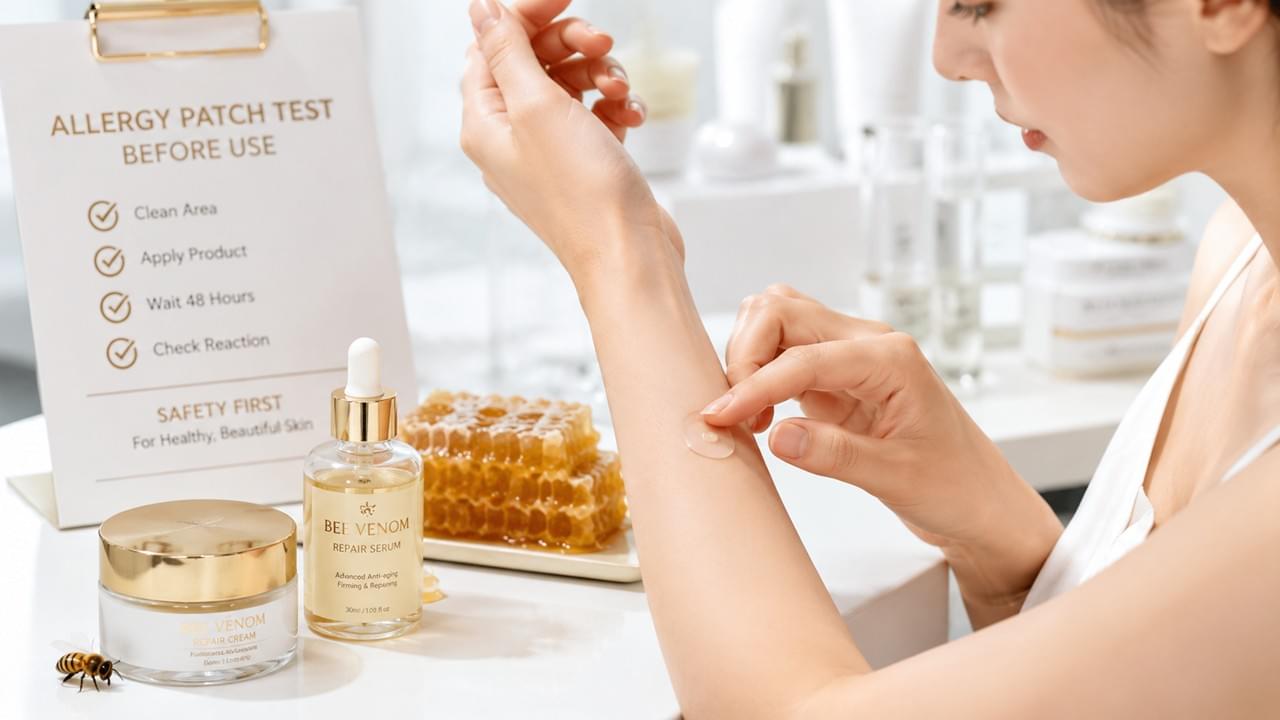
Bee Venom Product Safety is the most important factor every consumer should understand before using bee venom skincare or therapeutic products. While bee venom has gained popularity for its anti-aging, soothing, and skin-rejuvenating benefits, improper use can lead to irritation, allergic reactions, or even severe medical emergencies. Whether you are a beginner, a sensitive skin user, or someone exploring bee venom products for the first time, understanding allergy testing, contraindications, and emergency response procedures is essential for safe and effective use.
But one principle matters more than anything else: bee venom product safety always comes before results.
Bee venom is still a biologically active toxin extracted from bees. Even low-concentration skincare formulas may trigger allergic reactions in sensitive individuals. Improper use, skipping allergy tests, or ignoring contraindications can lead to redness, severe irritation, skin barrier damage, or even life-threatening allergic shock.
This guide explains everything you need to know about Bee Venom Product Safety, including allergy testing methods, correct application techniques, contraindications, and emergency response procedures. Whether you use bee venom skincare products or medical bee venom formulations, this article will help you reduce risks and use these products more safely.
For readers new to bee venom skincare science, you can also review the ingredient overview from Healthline and cosmetic ingredient safety references from INCI Decoder.
1. Bee Venom Product Safety Starts with an Allergy Test ⚠️
No matter how healthy your skin looks, every new bee venom product requires an allergy test before use.
Bee venom contains highly sensitizing compounds such as phospholipase A2 and hyaluronidase. Different brands use different extraction methods, concentrations, and formulations. A product that worked previously does not guarantee another formula will be safe.
How to Perform a Bee Venom Allergy Test for Skincare
Recommended Test Areas
- Behind the ear
- Inner forearm
These areas closely resemble facial skin sensitivity while remaining discreet.
Step-by-Step Patch Test Process
- Clean the testing area with water only
- Dry gently with a clean towel
- Apply a coin-sized amount of the product
- Keep the area dry and untouched
- Observe continuously for 48 hours
⏰ Delayed allergic reactions are common, so the full 48-hour observation period is essential.
Safe vs Unsafe Reactions
✅ Safe signs:
- No redness
- No itching
- No swelling
- No burning sensation
❌ Unsafe signs:
- Redness
- Itching
- Tingling
- Rash
- Swelling
If any irritation appears, wash the area immediately and stop using the product permanently.
2. Bee Venom Product Safety for Medical Formulations 🏥
Prescription bee venom injections and therapeutic ointments should never be self-administered.
According to guidance from Mayo Clinic and Cleveland Clinic, severe allergic reactions can escalate rapidly and require medical supervision.
Important Safety Rules
- Bee venom injections require professional skin testing first
- Use only under physician supervision
- Never buy injectable products from unofficial online sellers
- Follow prescribed dosage strictly
- Stop treatment immediately if symptoms appear
3. How to Use Bee Venom Skincare Safely ✨
Correct application greatly improves both safety and effectiveness.
Recommended Skincare Order
Daily Routine Sequence
- Bee venom cleanser
- Bee venom toner
- Bee venom serum
- Bee venom lotion or cream
- Bee venom mask (2–3 times weekly)
Usage Frequency
Beginners
- Start with 2–3 times weekly
- Increase gradually after skin adapts
Regular Users
- Low-concentration creams and toners may be used morning and night
🚫 Avoid excessive layering or thick application. Higher amounts do not produce faster results.
4. Bee Venom Product Safety for Different Skin Types 🌿
Sensitive Skin & Dry Skin
People with sensitive skin should prioritize:
- Alcohol-free formulas
- Fragrance-free formulas
- Barrier repair ingredients
Helpful supporting ingredients include:
- Ceramides
- Squalane
- Hyaluronic acid
Oily & Acne-Prone Skin
Choose lightweight, non-comedogenic products paired with:
- Niacinamide
- Salicylic acid
Avoid combining bee venom with strong retinoids or high-strength acids at the same time.
Healthy Skin Types
Healthy skin users may combine bee venom with:
- Retinol
- Vitamin C
- Peptides
For better tolerance:
☀️ Use bee venom in the morning
🌙 Use retinol at night
5. Dangerous Mistakes You Must Avoid ❌
Never Skip the Patch Test
This is the most common reason for severe reactions.
Do Not Chase Extremely High Concentrations
Most skincare products work effectively between 0.05%–0.3%.
Avoid Use on Damaged Skin
Do not apply bee venom products when skin is:
- Sunburned
- Inflamed
- Broken
- Severely acne-irritated
Do Not Replace Medical Treatment
Bee venom skincare products are cosmetics, not medications.
Conditions like severe acne, eczema, arthritis, or infections require professional medical care.
Never Use Expired Products
Expired bee venom products may:
- Lose activity
- Grow bacteria
- Trigger irritation or infection
For ingredient stability references, cosmetic formulators often follow standards discussed by Paula’s Choice Ingredient Dictionary.
6. Absolute Contraindications: Who Should Never Use Bee Venom Products 🚫
Certain groups should completely avoid bee venom products.
High-Risk Groups
People Allergic to Bee Products
This is an absolute contraindication.
Pregnant or Breastfeeding Women
Safety data remains limited.
Children Under 16
Children have more reactive immune systems and delicate skin barriers.
People with Serious Medical Conditions
Especially:
- Liver disease
- Kidney disease
- Cardiovascular disease
- Blood clotting disorders
People with Active Skin Inflammation
Avoid use during:
- Severe allergic flare-ups
- Skin infections
- Open wounds
- Acute dermatitis
7. Emergency Response Guide for Bee Venom Side Effects 🚑
Even careful users should understand emergency response procedures.
Mild Reactions
Symptoms
- Slight redness
- Mild itching
- Temporary tingling
What to Do
✅ Rinse thoroughly with cool water
✅ Stop all active skincare products
✅ Use gentle moisturizers only
✅ Avoid sun exposure
Most mild symptoms improve within 1–3 days.
Moderate Reactions
Symptoms
- Strong redness
- Rash
- Burning sensation
- Peeling
- Swelling
Emergency Steps
❄️ Rinse continuously for 10–15 minutes
❄️ Apply cool compresses
❄️ Stop all cosmetics immediately
❄️ Visit a dermatologist promptly
Do not self-medicate with steroid creams without medical guidance.
Severe Reactions: Anaphylaxis (Medical Emergency) 🚨
Dangerous Symptoms
- Difficulty breathing
- Chest tightness
- Dizziness
- Vomiting
- Rapid swelling
- Low blood pressure
- Loss of consciousness
Immediate Actions
- Call emergency services immediately
- Lay the patient flat
- Keep the airway open
- Use an epinephrine auto-injector if available
- Begin CPR if breathing stops
⚠️ Severe allergic reactions can become fatal within minutes.
For official emergency allergy guidance, refer to American Academy of Allergy, Asthma & Immunology.
Final Thoughts: Safety Always Comes First ❤️
Bee venom can be a powerful skincare and wellness ingredient when used responsibly. It may support anti-aging, soothing, and skin-repair benefits for suitable users.
However, ignoring proper safety practices can lead to serious health risks.
The goal of Bee Venom Product Safety is not to create fear — it is to help users enjoy the potential benefits while minimizing preventable harm.
By following proper allergy testing, correct application methods, contraindication rules, and emergency procedures, you can use bee venom products with far greater confidence and peace of mind.