Introduction: Can Honey Be Part of a Diabetes-Friendly Diet? 🍯
For millions of people managing diabetes, choosing the right sweetener can be challenging. The connection between Honey and Blood Sugar Control has attracted increasing attention because many consumers are looking for natural alternatives to refined sugar.
Unlike regular table sugar, pure honey contains small amounts of antioxidants, enzymes, minerals, and plant-based compounds created during the transformation of flower nectar by bees. These natural characteristics make honey an interesting choice for people who want a more traditional sweetening option.
However, honey is still a carbohydrate-containing food. It is not a diabetes treatment and cannot replace medication, exercise, or professional medical advice. Understanding how honey affects blood glucose levels is the key to making informed dietary decisions.
For more information about maintaining balanced nutrition, readers can also explore the dietary recommendations provided by the American Diabetes Association.
🍯 How Honey and Blood Sugar Control Are Connected
The relationship between Honey and Blood Sugar Control depends on several factors, including honey variety, serving size, individual metabolism, and overall eating habits.
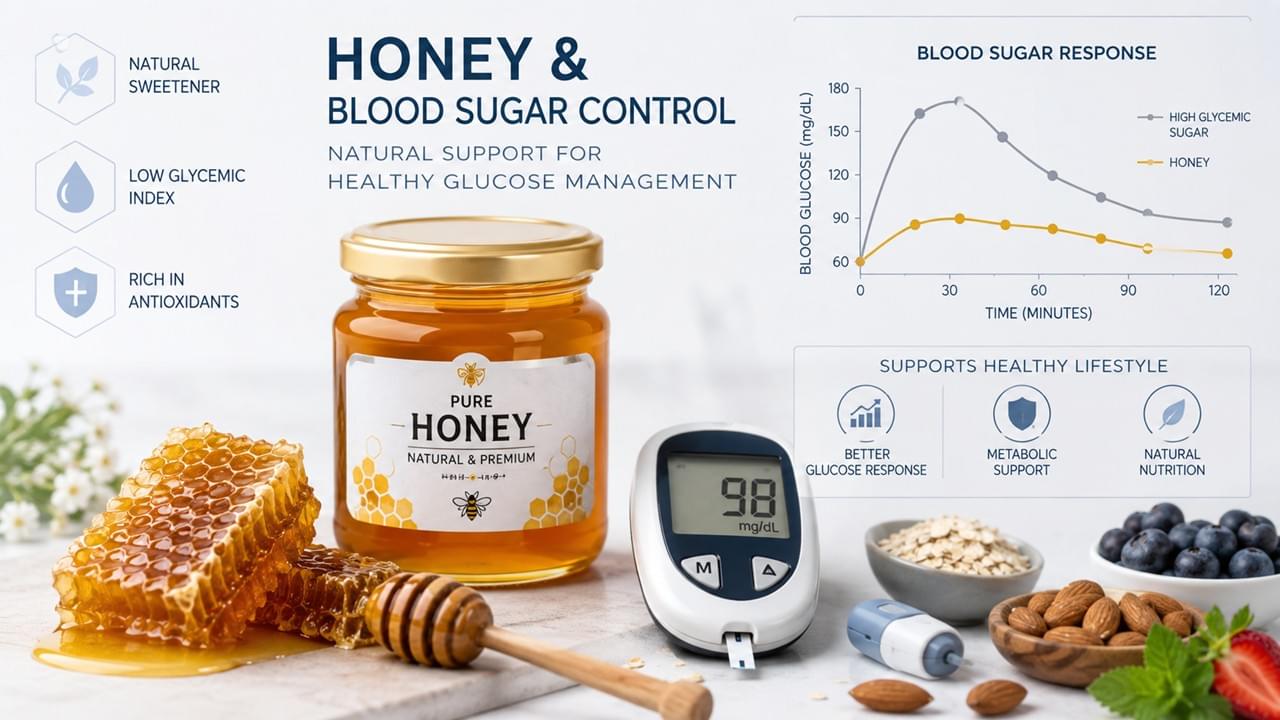
Honey mainly contains natural sugars such as glucose and fructose. Because fructose is processed differently in the body compared with glucose, honey may create a slower blood sugar response than some refined sweeteners.
Some research suggests that certain honey varieties may have a lower glycemic index compared with regular sugar. This has increased interest in honey as a low glycemic index natural sweetener among health-conscious consumers.
However, a lower glycemic response does not mean honey can be consumed without limits. Portion control remains essential, especially for people monitoring blood glucose levels.
🌿 Why Honey Is Different From Refined Sugar
Regular white sugar mainly provides sucrose, while natural honey contains additional compounds that contribute to its unique characteristics.
These include:
- Flavonoids and polyphenols with antioxidant properties
- Natural enzymes formed during honey production
- Trace minerals such as potassium, calcium, and magnesium
Because of these natural components, honey is often valued not only for sweetness but also for its traditional nutritional image.
Consumers interested in natural bee products can learn more about other wellness-focused ingredients through resources such as our guide to natural bee products and their benefits.
Modern food buyers are also paying more attention to transparency, sourcing, and quality standards. Traceability and strict production controls have become important factors when selecting premium honey products.
🩺 Diabetes and Honey Consumption: What Should Patients Know?
When discussing diabetes and honey consumption, moderation is the most important consideration.
Some people with well-managed diabetes may include small amounts of honey in their diet, especially when replacing highly processed sweeteners. For example, adding a small amount of honey to yogurt, oatmeal, or beverages may provide sweetness while maintaining a cleaner ingredient profile.
However, honey should always be counted as part of daily carbohydrate intake.
People with diabetes should consider the following:
✅ Control Portion Size
Even natural honey contains sugar. Consuming large quantities may increase blood glucose levels and make diabetes management more difficult.
✅ Monitor Personal Blood Glucose Response
Everyone responds differently to carbohydrates. Measuring blood sugar before and after eating honey can help individuals understand how their bodies react.
✅ Combine Honey With Balanced Foods
Pairing honey with fiber-rich foods, protein, or healthy fats may help create a more balanced meal pattern.
The World Health Organization Healthy Diet Guidelines also emphasizes the importance of balanced eating patterns rather than focusing on a single ingredient.
🍯 Choosing the Best Honey for Diabetic Patients
Many consumers ask: “What is the best honey for diabetic patients?”
The answer depends less on one specific honey type and more on product purity, quality, and individual dietary needs.
When selecting honey, consider:
⭐ Pure honey without unnecessary additives
⭐ Reliable suppliers with transparent sourcing
⭐ Proper quality testing and storage
⭐ Moderate consumption according to personal health goals
Premium varieties such as acacia honey, multiflower honey, and other specialty honeys are often selected by consumers because of their unique flavors and natural characteristics.
For buyers interested in exploring different varieties, our premium natural honey products provide information about sourcing, product features, and available options.
🍯 Honey vs Artificial Sweeteners: Which Option Is Better?
The comparison between honey and artificial sweeteners depends on personal nutrition goals.
Artificial sweeteners may help reduce sugar intake because many contain little or no carbohydrates. However, some consumers prefer natural ingredients because of taste preferences and clean-label trends.
Honey provides:
✔ Natural origin
✔ Rich flavor profile
✔ Traditional food value
✔ Naturally occurring antioxidant compounds
On the other hand, honey still contributes carbohydrates and should be consumed carefully by people managing diabetes.
Choosing between honey and other sweeteners should focus on overall dietary balance rather than simply choosing the product labeled “natural.”
🌱 Smart Ways to Enjoy Honey While Managing Blood Sugar
For those who choose to include honey in their lifestyle, these practical tips can help:
🍯 Use honey as a flavor enhancer rather than the main ingredient.
🥣 Add small amounts to fiber-rich foods such as oatmeal or whole grains.
☕ Avoid large servings of honey-based drinks.
📊 Pay attention to your glucose response.
Honey can also be combined with other bee-derived nutritional products. For example, consumers interested in learning more about traditional bee ingredients can explore our article about royal jelly health benefits.
Honey Can Be a Sweet Choice With Smart Balance
The relationship between Honey and Blood Sugar Control is not simply about whether honey is good or bad for people with diabetes. Honey may offer advantages compared with refined sugar because of its natural composition, flavor, and antioxidant content, but it remains a sugar-containing food.
For individuals managing diabetes, moderation, monitoring, and personalized nutrition choices are essential.
As demand for natural ingredients continues to grow, high-quality honey remains an important product in the global health and wellness market. When selected carefully and consumed responsibly, honey can continue to be enjoyed as part of a balanced lifestyle.