Honey has been enjoyed for centuries as a natural source of sweetness, but honey cooking offers far more possibilities than simply drizzling it over toast. Its rich aroma, smooth texture, and distinctive floral character can transform everyday dishes into something more interesting and satisfying.
From golden marinades and glossy sauces to homemade drinks and healthier-style desserts, honey can play several roles in the kitchen. It can add sweetness, improve texture, balance acidity, and bring a subtle depth of flavor that ordinary sugar often cannot provide.
The key is to use honey thoughtfully. Although honey is a natural ingredient, it is still primarily a source of sugars, so portion size remains important. USDA resources also recognize honey as one option for replacing refined sugar in baking, while emphasizing moderation as part of an overall healthy eating pattern.
So, how can you make the most of this versatile ingredient? Here are seven practical ideas worth trying.
Why Honey Works So Well in the Kitchen
Honey is more than a sweetener. It contains naturally occurring flavor compounds that vary according to its floral source, which means different honeys can create noticeably different culinary experiences.
Light-colored honey can have a delicate, floral character that works beautifully in tea, yogurt, fruit dishes, and light pastries. Darker honey may offer a deeper, more robust flavor that suits marinades, roasted vegetables, sauces, and hearty baked goods.
This diversity is one reason honey cooking can be so creative. The ingredient can be selected according to the dish rather than treated as a one-size-fits-all sweetener.
Honey also has a naturally viscous texture. When warmed gently, it blends easily into sauces, dressings, and marinades. In baking, it can contribute moisture and help create a softer texture.
For more information about natural honey and bee products, you can explore the Delee Foods Group natural honey and bee products range.
1. Try Honey Cooking in Homemade Marinades
One of the easiest ways to introduce honey cooking into everyday meals is through marinades.
Honey works particularly well with ingredients such as soy sauce, lemon juice, garlic, ginger, mustard, olive oil, and herbs. The sweetness helps balance salty, sour, and spicy flavors while creating a beautiful glaze during cooking.
A simple chicken marinade, for example, can combine honey, lemon juice, garlic, soy sauce, and a little black pepper. After several hours of marinating, the chicken can be grilled, roasted, or pan-cooked.
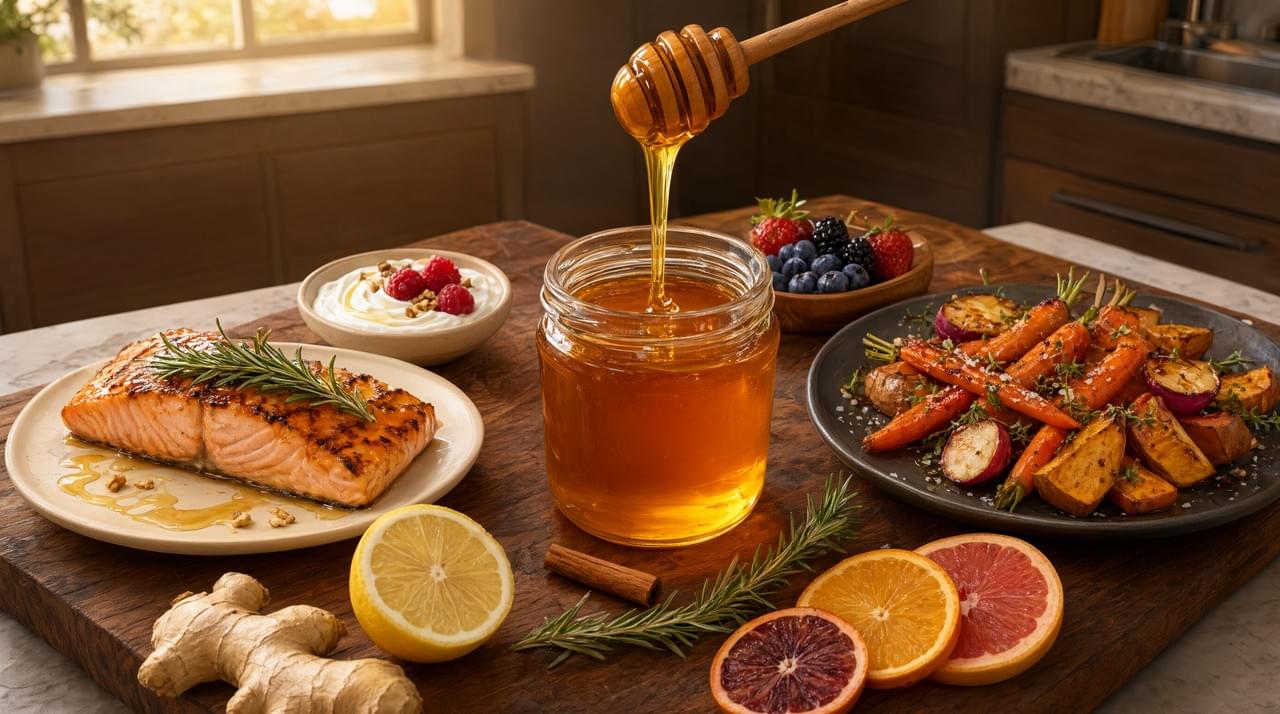
Honey is also useful for salmon, shrimp, pork, and roasted vegetables. A small amount can help create a glossy surface and encourage attractive browning.
The important point is temperature control. Honey contains natural sugars that can brown quickly, so dishes with honey-based marinades should be monitored carefully during high-temperature cooking.
2. Create Better Honey Recipes for Breakfast
Breakfast is another easy place to experiment with honey recipes.
Instead of adding refined sugar to oatmeal, try a small drizzle of honey with sliced banana, berries, nuts, or cinnamon. Greek yogurt with honey, walnuts, and fresh fruit is another simple combination that requires almost no preparation.
Honey can also be mixed into homemade granola. Combine oats, nuts, seeds, cinnamon, and a moderate amount of honey before baking. The result is a naturally sweet, crunchy breakfast topping.
For pancakes and waffles, honey can be used as a topping rather than mixing a large quantity of sugar into the batter. This gives you greater control over sweetness while allowing the natural aroma of the honey to remain noticeable.
🍯 Simple idea: Pair mild honey with fruit and dairy, while choosing a stronger-flavored honey for nuts, whole grains, and baked breakfast dishes.
3. Explore Healthy Baking with Honey
Healthy baking with honey does not mean that a cake or cookie suddenly becomes a health food. Instead, it means using honey as one ingredient within a more balanced recipe.
Honey can replace some of the refined sugar in selected baked goods. USDA Agricultural Research Service guidance specifically notes honey as one possible natural sweetener for baking.
However, replacing sugar with honey requires some adjustment because honey contains moisture. A recipe may need changes to liquid ingredients, baking temperature, or baking time.
Honey is particularly suitable for banana bread, muffins, oatmeal cookies, spice cakes, granola bars, and fruit-based desserts.
Its flavor also pairs naturally with cinnamon, ginger, vanilla, citrus, nuts, apples, pears, and dark chocolate.
Rather than trying to make every dessert extremely sweet, use honey to build a more layered flavor profile. A smaller amount of honey combined with naturally sweet fruits can often create a more balanced result.
4. Make Refreshing Honey Drinks
Honey and beverages are a natural combination.
A classic honey-lemon drink is simple, but there are many other possibilities. Honey can be stirred into warm tea, blended into iced herbal drinks, or combined with lemon, ginger, mint, or fresh fruit.
For a refreshing summer drink, mix honey with warm water first so that it dissolves easily. Add lemon juice, cold water, ice, and fresh mint. You can also experiment with orange, grapefruit, berries, or cucumber.
Honey works particularly well in drinks because it provides sweetness while contributing its own aroma.
For hot beverages, avoid treating honey as a magical health ingredient. The most practical advantage is its flavor and versatility. The nutritional value of the overall drink still depends on the complete recipe.
5. Use Honey in Sauces and Salad Dressings
A small amount of honey can dramatically change the character of a sauce.
Try combining honey with mustard for a sweet-and-tangy dressing. Mix it with balsamic vinegar and olive oil for a simple salad vinaigrette. Add garlic, chili, ginger, or sesame oil when you want a stronger Asian-inspired profile.
Honey can also balance tomato-based sauces, barbecue-style glazes, and spicy condiments.
The secret is balance.
Too much honey can make a sauce overly sweet and heavy. Too little may disappear beneath stronger ingredients. Start with a small quantity and adjust gradually.
This makes honey as a natural sweetener especially useful when you want sweetness to work together with acidity, spice, or savory flavors instead of dominating the dish.
6. Give Roasted Vegetables a Golden Finish
Honey is not only for desserts.
Roasted carrots, sweet potatoes, pumpkin, onions, and Brussels sprouts can all work well with a light honey glaze.
Try combining honey with olive oil, black pepper, a pinch of salt, and fresh herbs. Toss the vegetables before roasting, or brush the honey mixture on during the final stage of cooking.
The result can be pleasantly caramelized on the outside while retaining the natural flavor of the vegetables.
For a more complex profile, add mustard or lemon juice. For a warmer autumn-style dish, cinnamon and thyme can work surprisingly well.
This is one of the simplest ways to introduce honey cooking into savory meals without making them taste like dessert.
7. Experiment with Honey-Based Desserts
Desserts are perhaps the most obvious application for honey, but there is still plenty of room for creativity.
Honey can be used in fruit parfaits, baked apples, custards, yogurt desserts, puddings, and homemade energy bites.
A particularly simple idea is baked fruit. Slice apples or pears, add cinnamon and a small drizzle of honey, then bake until tender. Add chopped walnuts or almonds for texture.
Honey also works beautifully with citrus. Orange, lemon, and grapefruit can cut through its sweetness and create a fresher dessert.
For inspiration, USDA’s SNAP-Ed recipe collection includes a honey flan made with honey, milk, eggs, vanilla, lemon zest, and cinnamon, showing how honey can function as a central sweetening ingredient in a structured dessert.
The goal is not to add honey everywhere. It is to understand where its flavor can make the biggest difference.
How to Replace Refined Sugar with Honey
One of the most common questions about honey cooking is whether honey can simply replace sugar at a one-to-one ratio.
Usually, it is not that simple.
Granulated sugar is dry and crystalline, while honey contains water and has a concentrated liquid texture. Therefore, replacing sugar with honey can change moisture, browning, texture, and baking time.
A better approach is to start with recipes where honey is already commonly used, or replace only part of the sugar during your first experiment.
Keep these practical points in mind:
- 🍯 Start with a moderate amount of honey.
- 💧 Remember that honey adds moisture.
- 🔥 Watch baked goods carefully because honey can brown quickly.
- 🍋 Use acidity such as lemon juice to balance sweetness.
- 🌿 Match the honey’s floral profile with the other ingredients.
- 🥄 Remember that honey is still a source of sugars.
USDA nutrition resources classify honey among sources of added sugars, so its “natural” origin should not be confused with being sugar-free or calorie-free.
Choosing the Right Honey for Honey Cooking
The type of honey you choose can influence the final dish.
Light, delicate honey is often a good choice for beverages, yogurt, fruit, and light desserts. A stronger honey can work better in marinades, roasted foods, sauces, and recipes containing spices.
Floral origin also influences aroma and taste. The source document highlights differences among varieties such as acacia, buckwheat, eucalyptus, and other honeys, emphasizing that honey can vary significantly in flavor and character.
For food manufacturers and professional kitchens, consistency is equally important. A reliable honey supplier should be able to provide clear product information, traceability, and stable quality.
Delee Foods Group states that its honey and bee products are subject to traceability procedures and standardized quality management practices.
Honey Cooking for Food Manufacturers
The potential of honey cooking extends beyond home kitchens.
Food manufacturers can incorporate honey into bakery products, beverages, sauces, dressings, marinades, confectionery products, dairy applications, and snack foods.
For B2B buyers, however, culinary performance is only part of the decision. Consistent flavor, supply reliability, product specifications, traceability, packaging options, and logistics can be equally important.
This is particularly relevant when honey becomes part of a commercial formula. A change in honey flavor, moisture, or consistency can affect the final product.
Delee Foods Group positions itself as a natural honey and bee-product manufacturer and exporter with its own bee farm and factory, traceability procedures, R&D capabilities, and flexible order quantities.
If you are developing a honey-based food product or evaluating honey for commercial production, you can contact Delee Foods for a product inquiry or quotation.
A More Creative Way to Think About Honey
The most interesting aspect of honey cooking is that honey does not have to be treated simply as “something sweet.”
It can be a flavor builder.
It can soften the sharpness of vinegar, balance chili heat, complement citrus, enhance roasted vegetables, improve the character of baked goods, and create a glossy finish on grilled foods.
That versatility makes honey especially interesting for cooks who want to explore natural ingredients without making meals complicated.
At the same time, moderation matters. Honey can be part of a balanced diet, but it remains a concentrated source of sugars. The USDA’s current nutrition guidance and research resources reinforce the importance of keeping overall added-sugar intake in perspective rather than assuming one sweetener is automatically healthier than another.
Final Thoughts: Let Honey Do More in Your Kitchen
Honey cooking is ultimately about creativity and balance.
Instead of using honey only for tea or toast, try it in marinades, salad dressings, roasted vegetables, breakfast dishes, beverages, baked goods, and desserts. Explore different floral varieties and pay attention to how their aromas interact with savory and sweet ingredients.
The best honey recipes do not necessarily use large quantities. Often, a small amount is enough to add aroma, color, texture, and depth.
And when experimenting with healthy baking with honey, remember the bigger picture: honey can be a useful alternative to refined sugar in some recipes, but it is still a sugar-containing ingredient. The real opportunity is to combine honey with fruits, whole grains, nuts, vegetables, spices, and other quality ingredients to create food that is both enjoyable and thoughtfully made.
🍯 From a simple drizzle to a sophisticated glaze, honey has a surprisingly large role to play in modern cooking.